Living in a conservation area can be one of the pleasures of owning a home in Bristol or Bath. These neighbourhoods often have the character people value most: strong proportions, good materials, mature streetscapes and a real sense of place. They can also bring extra considerations when you are thinking about extending, remodelling or upgrading your house. The good news is that careful, well-prepared design is often welcomed. The key is understanding how to improve the way your home works while respecting the qualities that made the area worth protecting in the first place.
Conservation area status does not mean you cannot change your home. In general across the UK, it means the local authority will look more closely at how proposed works affect the character and appearance of the wider area, not just the house itself. That can influence choices around scale, roof form, windows, doors, materials, boundary walls and even smaller external details. In places like Bath especially, where many homes sit within a highly sensitive historic setting, that level of scrutiny can be more noticeable, so it is always wise to check the position with the local authority before making assumptions.
What usually matters most in design terms
For homeowners, the most useful starting point is to think beyond the extension itself. Planners and conservation officers will usually be considering whether the work feels subservient to the original building, whether it protects important views from the street, and whether the materials sit comfortably with the existing architecture. In Bristol and Bath, that may mean taking particular care with rear additions, side returns, dormers, glazing proportions and masonry repairs. A successful scheme does not have to mimic the original exactly, but it should feel considered, calm and appropriate to the building.
That balance is often where a design-and-build approach can help. Early advice can shape what is likely to be supported before too much time or money is spent on drawings that may need major revision later. At NOOR, our house extension service is built around that practical early thinking: how the planning route, the heritage context, the construction details and the finished feel of the home all connect from the outset.
Planning, permissions and heritage detail
One of the most common misunderstandings is assuming that work at the back of a property will not matter because it is less visible. Sometimes that may be simpler, but not always. In conservation areas, changes that are modest in size can still be assessed carefully if they alter the character of the house or setting. Depending on the property and the works, you may also need to think about listed building consent if the home is listed, as that is separate from conservation area status. UK planning rules can also affect what might otherwise fall under permitted development, so it is best to verify the position locally.
Windows, doors, roofing materials and external finishes often need just as much attention as the footprint of the extension. Homeowners in Bath are sometimes surprised by how important these details can be in a heritage setting. The same goes for insulation upgrades, rooflights, solar panels and replacement rainwater goods. None of these are impossible in principle, but they usually benefit from a joined-up strategy rather than a piecemeal approach. Looking at the house as a whole tends to produce a better planning story and a better finished result.
Balancing old fabric with modern living
Most people are not renovating for planning approval alone; they are trying to make daily life easier. That might mean opening up a dark ground floor, improving the relationship with the garden, adding utility space, reworking upper-floor layouts or upgrading thermal performance. In older housing stock around Bristol, Bath and the surrounding area, those aims are common, but the best answer is rarely the biggest intervention. Often the most successful projects are the ones that edit carefully: keeping what gives the house its character and improving what currently holds it back.
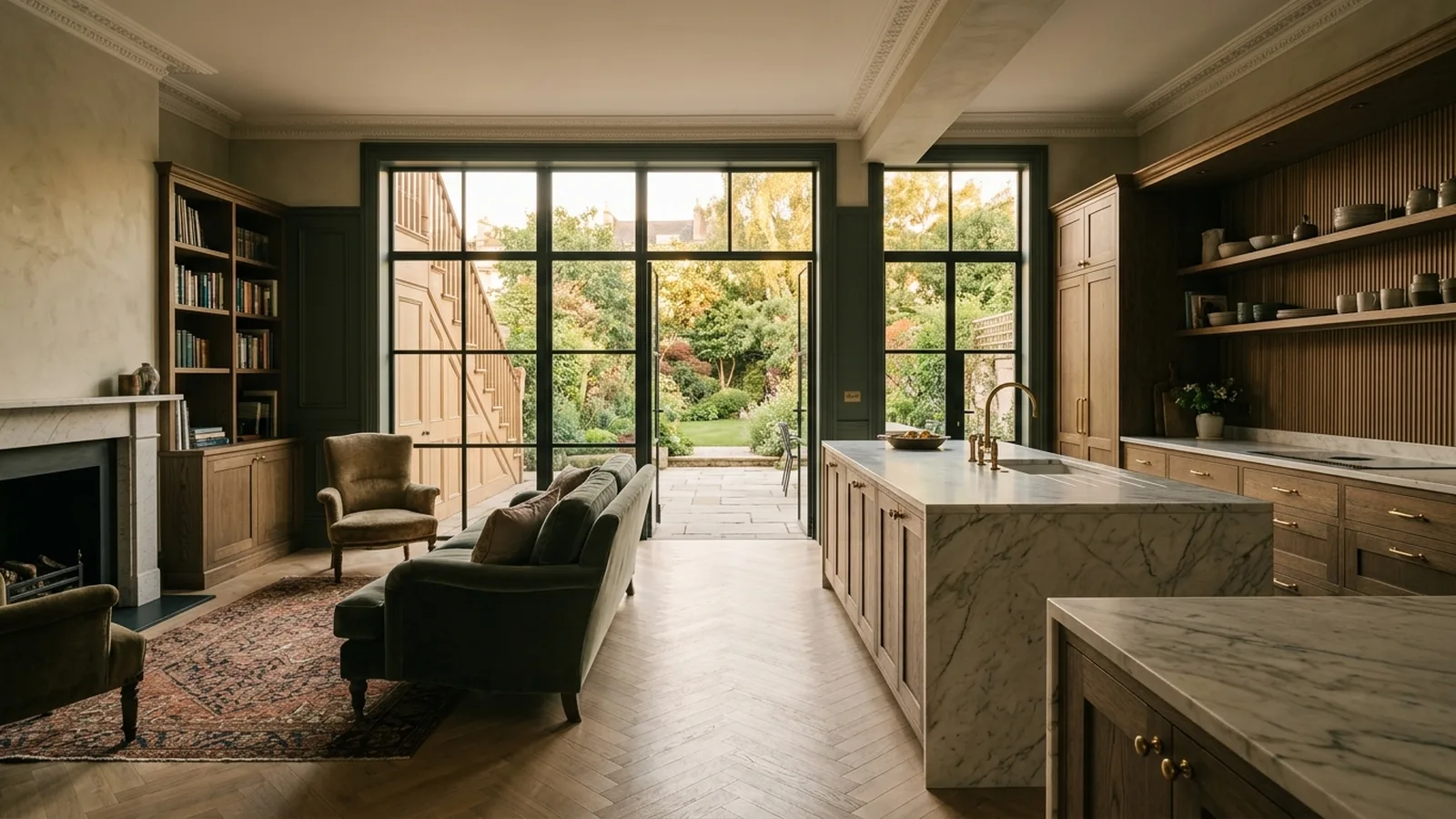
This is also where material choices matter. Good contemporary additions in conservation areas are often quiet rather than shouty. Brick, stone, timber, zinc and slim-framed glazing can all work, depending on the building and context, but they need proportion and detailing to be right. A recent NOOR renovation in the area, which you can see here, reflects that broader principle: thoughtful design tends to feel more at ease in sensitive settings than something trying too hard to compete with the original building.
Budget is another area where early clarity helps. As a rough guide, a straightforward extension and renovation package might start from the mid tens of thousands, while larger or more complex conservation-area projects can run well into the low or mid hundreds of thousands, particularly where bespoke joinery, high-quality glazing, structural alterations or specialist repairs are involved. In Bath especially, existing fabric, access constraints and finish expectations can all influence costs. If you want a first sense of numbers, our cost calculator can help frame a realistic starting point.
Choosing a team and preparing well
Because conservation-area work depends so heavily on judgement, experience and communication, it is worth choosing a team that can connect design intent with buildability. Clear surveys, measured drawings, heritage-aware design decisions and a sensible specification all reduce risk later. So does having one team that understands sequencing on site, especially in older homes where surprises are more common once work begins. You can read more about how we work and how we guide projects from early ideas through design and construction.
If you are still exploring options, it can help to look at a broader mix of completed work rather than searching for one house identical to yours. Period terraces, villas, townhouses and detached homes across Bristol and Bath all bring different opportunities and constraints, but the underlying questions are similar: what should be preserved, what can change, and how can the result feel both elegant and easy to live in? Our wider projects portfolio can be a useful place to start when thinking about the level of finish and approach that may suit your home.
Conservation area projects are rarely about doing less for the sake of it. They are about doing the right things, in the right way, so the house works better without losing the qualities that make it special. With careful design, realistic budgeting and a thoughtful planning strategy, extending and renovating in Bath or Bristol can absolutely be achievable. If you would like to talk through your home and what may be possible, you are very welcome to request a consultation.
[ Talk to NOOR ]
Planning a project of your own? Request a free initial consultation and we will give you honest, informed advice on your home.
Request a Consultation