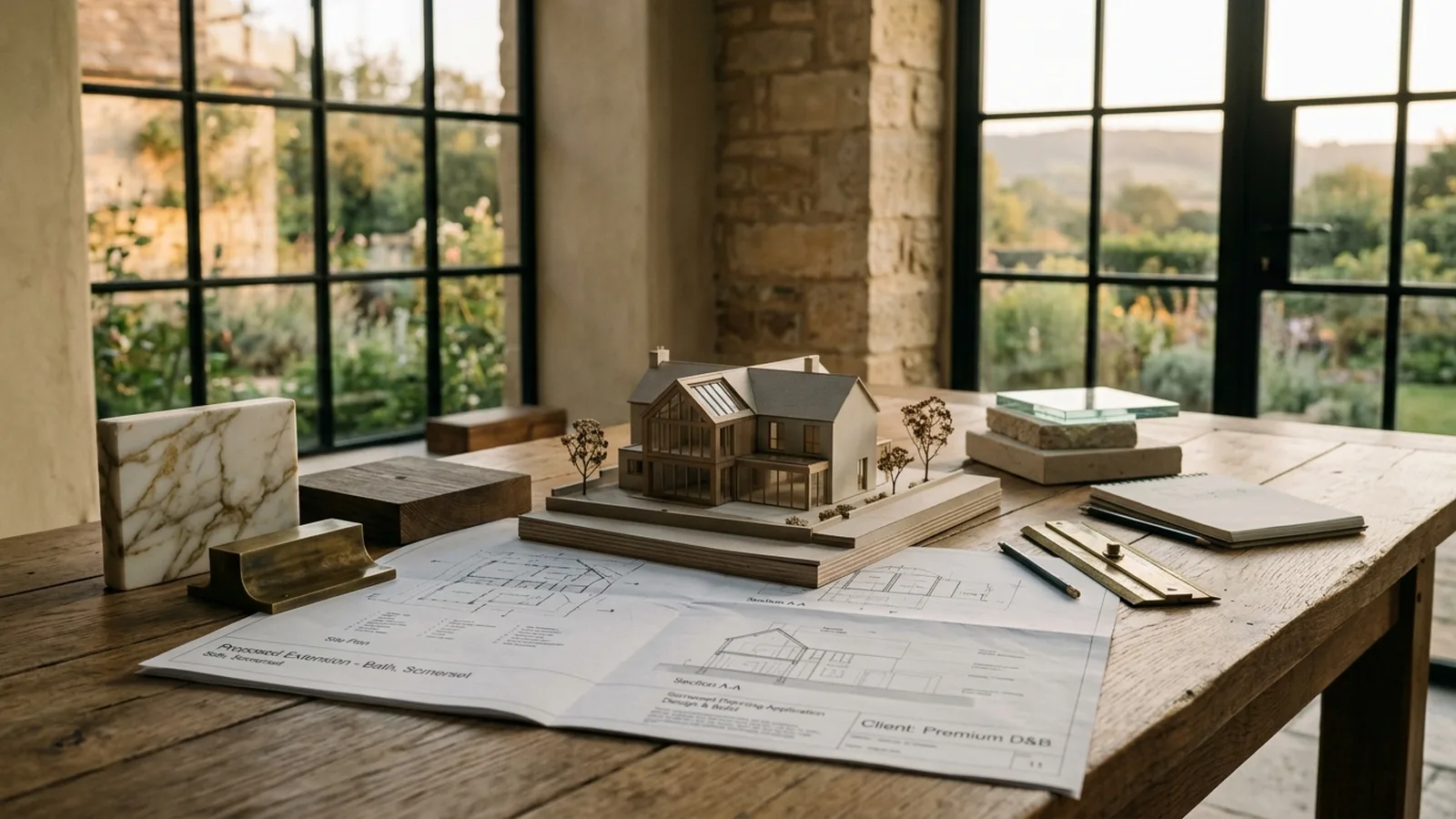
If you are thinking about extending your home in Somerset, one of the first questions is usually whether you need planning permission. The short answer is: sometimes. Some house extensions can be built under permitted development rights, while others need a full planning application. The difference depends on the size and position of the extension, the type of property, and any site-specific constraints that apply to your home.
For many homeowners, the easiest way to think about it is this: planning permission is about whether the principle and appearance of the extension are acceptable, while building regulations are about how it is constructed. Even if planning permission is not required, building regulations approval is often still needed. If you are at the early stage of exploring options, our house extension services page gives a helpful overview of what is typically involved.
When planning permission may not be needed
In the UK, some extensions fall within permitted development rights, which allow certain types of work without a full planning application. In broad terms, this can sometimes include modest rear extensions, side extensions and certain loft or roof alterations, provided they stay within set limits for height, depth, materials and proximity to boundaries. These rules can be detailed, and what looks like a small change on paper can still fall outside them.
It is also worth knowing that permitted development is not always available. Flats and maisonettes do not usually benefit in the same way as houses, and rights may be restricted if the property has already been extended, if conditions were attached to an earlier permission, or if the home is in a more sensitive setting. In parts of Somerset, as in many areas of the UK, this can be especially relevant for period homes, rural properties and houses in designated areas. The safest approach is always to check with your local authority or a qualified professional before assuming an extension is exempt.
When planning permission is more likely
You are more likely to need planning permission if the extension is substantial, faces the road, significantly changes the shape of the house, or could affect neighbours through overlooking, loss of light or visual impact. Two-storey rear extensions, prominent side extensions, and designs that use very different materials from the existing house often need closer scrutiny. This is particularly common where the local housing stock is varied, as it often is across Somerset, with a mix that may include older cottages, many Victorian terraces, and post-war estates.
For homeowners, that does not mean ambitious design is off the table. It simply means the design needs to be carefully thought through. Good extension design balances your practical needs with the character of the house, the setting, and the relationship with adjoining homes. On our how we work page, you can see how we approach this in a structured way, from the first brief through to detailed delivery.
What the council is likely to consider
Although each application is judged on its own merits, local authorities generally look at similar issues across the UK. These usually include scale, massing, height, privacy, daylight, materials, and how well the proposal sits with the existing property and surrounding area. If your extension would overlook a neighbour's garden, appear overbearing from next door, or dominate the original house, those points may need to be addressed in the design before submission.
This is one reason early design work matters so much. A well-prepared scheme can often answer concerns before they arise, whether through adjusting window positions, stepping back upper floors, refining roof forms, or selecting materials that feel more natural. Looking at completed projects can be a useful way to understand how thoughtful design can add space without making an extension feel heavy or out of place.
Other permissions you may need
Planning permission is only one part of the picture. Depending on the property, you may also need building regulations approval, a party wall agreement, listed building consent, or other specialist input. If trees are protected, access is complex, drainage needs to be altered, or the site has technical constraints, these can all affect the programme and the design. If your home is listed, separate consent is generally needed for works that affect its character, even where an ordinary unlisted house might not need planning permission.
Budget is another practical factor that should be considered early. As a rough guide, single-storey extensions in Somerset might typically start from tens of thousands of pounds, while larger or more complex two-storey or highly specified extensions can rise well beyond that. The final figure depends on size, structure, ground conditions, glazing, kitchen or bathroom fit-out, and the level of finish. Our cost calculator can help you sense-check likely ranges before you go too far down the line.
For many homeowners in Somerset, the smoothest route is to treat planning as part of a wider process rather than a standalone hurdle. That means thinking about design, cost, buildability and approvals together from the beginning. Whether you are considering a rear kitchen extension, a side return, or a larger reworking of the ground floor, it helps to have a team that can look at the whole picture. You can also learn more about our broader services and the areas we support, including builders in Somerset.
If you are unsure where your project sits, a professional review can often save time, redesign work and unnecessary stress. A quick early assessment can clarify whether permitted development may be possible, whether a lawful development certificate is worth pursuing, or whether a full planning application is the more sensible route. If you would like tailored advice on a house extension in Somerset, you are welcome to request a consultation.
[ Talk to NOOR ]
Planning a project of your own? Request a free initial consultation and we will give you honest, informed advice on your home.
Request a Consultation