If you are thinking about extending your home, one of the first questions is usually cost. In Bristol, the answer depends on the size of the extension, the type of work involved and the level of finish you want, but as a rough guide, many house extensions fall somewhere between £2,200 and £3,500 per square metre for the build itself. More bespoke schemes, difficult sites or high-spec interiors can push that figure higher. The clearest way to think about budget is not as one single number, but as a range shaped by your home, your priorities and how much alteration is needed to the existing house.
For many households, a modest single-storey rear extension is the most straightforward option. Typically, you might expect a simple project of this kind to start from around £50,000 to £80,000, with larger or more refined versions often rising beyond that. A two-storey extension usually offers better value per square metre in pure structural terms, but because it adds more space, more complexity and often more internal reworking, total budgets are commonly higher, often starting around £90,000 to £140,000 and moving upward depending on specification. If you are at the very early stage, our cost calculator can help you sense-check a realistic starting budget.
Bristol homes vary a lot, and that matters. Many Victorian terraces, 1930s semis and post-war houses can all be extended successfully, but they each bring different constraints. A terraced property may involve tighter access, more careful structural sequencing and additional neighbour considerations. A detached or semi-detached house may offer easier site logistics, but ground conditions, drainage runs and the relationship to the garden can still affect cost. In short, the same square metreage can cost quite differently from one house to another.
What has the biggest impact on cost?
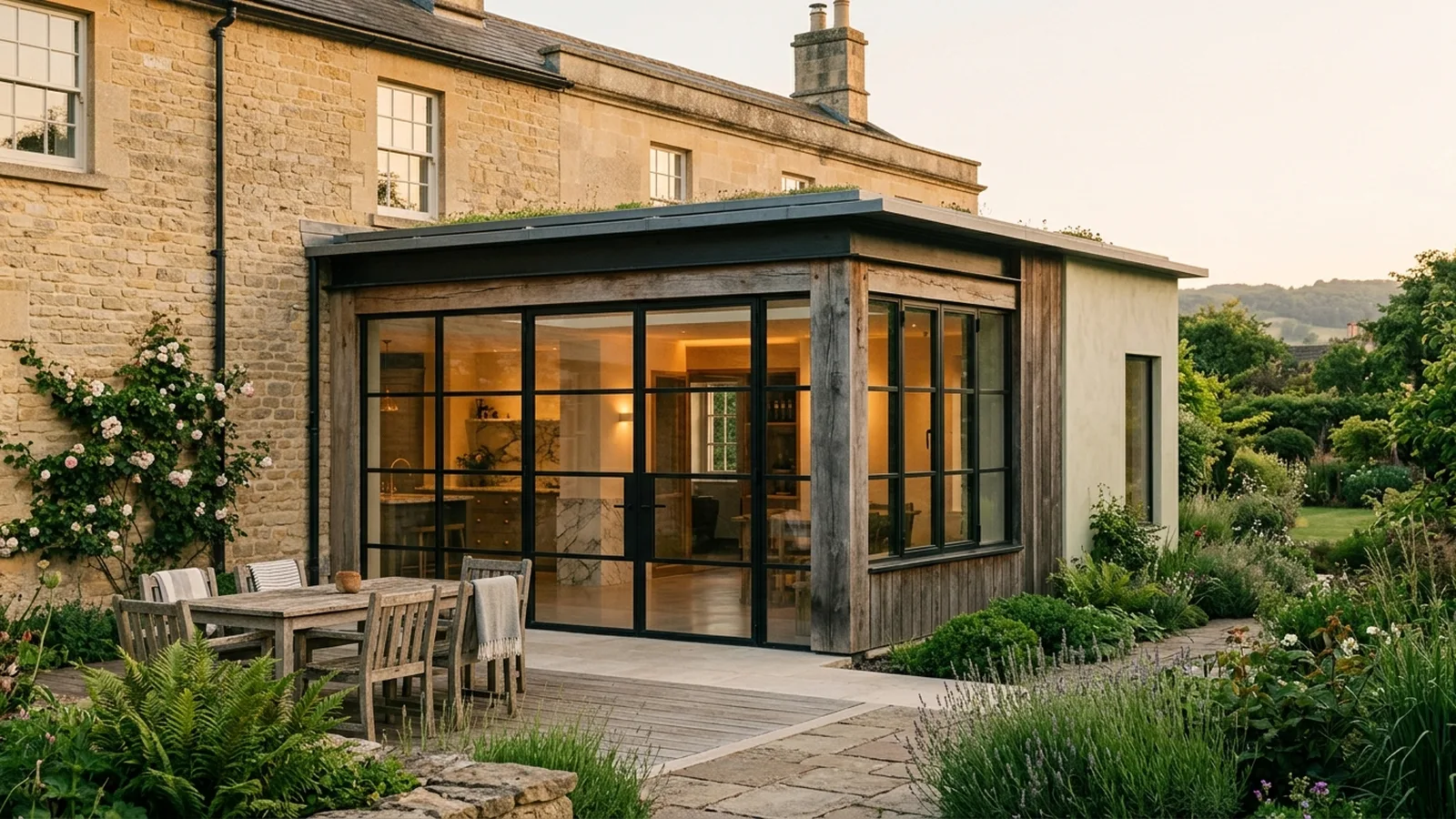
Size is only part of the story. Layout changes inside the existing house often make a big difference to budget. Opening up the rear wall, adding steelwork, moving a kitchen, relocating a utility room or creating a seamless kitchen-dining-living space can all add value to daily life, but they also add labour, materials and coordination. Glazing choices matter too: large sliding or slim-framed doors, rooflights and corner glazing can transform the feel of the extension, yet they tend to cost more than standard windows and doors.
Specification is another major factor. A straightforward extension with good-quality standard finishes will sit in one bracket, while a highly tailored design with premium joinery, underfloor heating, bespoke lighting, stone surfaces and carefully integrated storage will sit in another. Neither is right or wrong; it simply depends on how you want the space to perform and feel. At NOOR, we usually encourage clients to set priorities early so the budget works hardest where it matters most, whether that is natural light, durability, or the overall architectural finish. You can read more about our approach to house extensions if you are weighing up what level of design and build support you need.
Costs beyond the build
The construction cost is not the whole budget. You will also need to allow for design fees, structural engineering, planning-related drawings where required, building regulations, surveys if needed, and VAT where applicable. As a rough guide, these additional costs can add a meaningful percentage on top of the build figure. It is also sensible to keep a contingency, especially in older Bristol properties where hidden issues may only appear once work starts, such as ageing drains, uneven structures or the need for localised repairs.
Site conditions can influence price more than people expect. Restricted access through a narrow passage, limited storage space for materials, sloping gardens, retaining walls, mature trees, existing manholes or complex foundations can all affect programme and cost. In some cases, the extension itself is relatively simple, but the enabling works around it are what shift the budget upward. This is one reason early site-specific advice is so valuable: it helps turn broad online figures into something much more useful for your home.
Do you need planning permission?
Planning is another area where cost and scope can change. In the UK, some extensions may fall within permitted development, while others will need householder planning permission, depending on factors such as scale, height, location and previous alterations to the property. Rules can also vary in practice, particularly if a home is in a conservation area or has other constraints, so it is always best to check with Bristol City Council or your local authority before committing to a scheme. Even where formal planning permission is not needed, building regulations approval is usually still required.
A well-planned project can save money without cutting corners. Keeping the shape of the extension simple, aligning new plumbing with existing services, being realistic about glazing budgets and deciding early where to invest in premium finishes can all help. It is also worth thinking about the whole house, not just the new square metres. Sometimes the best results come from combining a moderate extension with smarter internal reconfiguration, rather than building the largest possible footprint.
How to budget more confidently
The most reliable budgets come from a joined-up process. Rather than pricing from rough sketches alone, it helps to develop the design, understand the existing house properly and make key decisions on layout and specification before construction starts. That reduces surprises and gives you a clearer sense of what is essential, what is optional and where there is flexibility. If you are comparing quotes, make sure you are comparing like for like: differences in exclusions, finishes, provisional sums and assumed structural work can make one price appear lower when it is not truly equivalent.
For homeowners in and around Bristol, choosing an experienced design-and-build team can also make budgeting easier because design, technical detail and delivery are considered together from the outset. That joined-up thinking is especially useful on extensions where the new work has to sit naturally with the old house, and where everyday practicalities matter just as much as the final appearance. You can explore our wider services to see how we support projects from concept through to construction.
Ultimately, the cost of a house extension in Bristol is shaped by your home, your brief and the quality you are aiming for. As a rough guide, many projects begin in the tens of thousands and rise according to size, complexity and finish, with full budgets often broader than first-time clients expect once design, approvals and contingencies are included. The good news is that with clear priorities, sensible allowances and the right advice early on, it is entirely possible to create more space in a way that feels both financially and architecturally well judged.
If you are considering an extension and would like tailored guidance on likely costs, design options and the best route forward for your property, we would be glad to help. You can request a consultation when you are ready.
[ Talk to NOOR ]
Planning a project of your own? Request a free initial consultation and we will give you honest, informed advice on your home.
Request a Consultation