Renovating a period home in Wells can be hugely rewarding, but it is rarely a quick or entirely straightforward job. Whether you are working on a Georgian townhouse, a Victorian terrace, an old cottage or a listed property with layers of history, the process tends to involve more investigation, more coordination and more careful decision-making than a newer house. The character is often exactly what draws people in, yet that same character usually comes with constraints, hidden defects and details that need a sensitive approach.
One of the first things to expect is that the house may reveal more once work begins. Older homes often have been altered over many decades, sometimes sympathetically and sometimes not. It is common to uncover uneven floors, outdated services, past damp repairs, hidden chimney work, tired roof structures or walls that are not quite where the drawings suggested. That does not mean the project is going wrong; it simply means early surveys, realistic budgeting and a measured programme matter more in period homes than they often do in standard renovations.
Understanding the house before design begins
A good renovation usually starts with patience. Before thinking about finishes or layouts, it helps to understand how the house has been built, how it has changed over time and where its real value lies. In Wells, many older properties have features worth retaining, from stonework and sash windows to staircases, fireplaces and original proportions. Measured surveys, condition assessments and early conversations with designers and builders can help you decide what should be restored, what can be adapted and where modern living can be introduced without losing the spirit of the building.
If the property is listed, or sits in a sensitive setting, expect the design stage to take longer. In the UK, listed building consent may be needed for works that affect the character of a listed home, and planning permission may also be required depending on the proposals. Even when changes seem modest, approvals can be more involved than owners first expect. The safest approach is always to check requirements with the local authority and to develop a scheme that balances practical family life with respect for the building’s fabric.
Planning for workmanship, materials and specialist input
Period renovations often depend on the quality of craftsmanship as much as the design itself. Matching lime plaster, repairing timber windows, upgrading insulation without trapping moisture, and integrating new electrics and heating into old walls all require care. This is one reason many homeowners choose a joined-up approach through full home renovations, where design, build and problem-solving are coordinated from the outset rather than split between multiple parties.
It is also worth expecting decisions around materials to take a little longer. Older buildings do not always respond well to modern products chosen for speed alone. Breathability, compatibility and repairability matter. In practice, that might mean repairing where possible rather than replacing, choosing natural materials in key areas, or accepting that bespoke joinery and heritage-style details can extend lead times. A premium result in a period home is usually the product of many small, thoughtful choices rather than one dramatic intervention.
Budgeting for the unknowns
Cost is one of the biggest concerns for any homeowner, and with period properties it is sensible to allow more contingency than you might for a straightforward modernisation. As a rough guide, a substantial whole-house renovation in an older home might typically start from the low hundreds of thousands, while listed homes or properties requiring significant structural repairs, specialist conservation work or extensive reconfiguration can go well beyond that. Exact figures depend on size, condition, specification and access, so early budgeting is about building a realistic range rather than chasing false precision.
A helpful way to approach this is to separate the visible wish list from the less visible essentials. Kitchens, bathrooms and finishes are easy to picture, but drainage, structure, roofing, wiring, plumbing and insulation upgrades can absorb a large share of the budget. It is also sensible to keep a contingency for discoveries once floors, ceilings and wall linings are opened up. For homeowners trying to sense-check scope at an early stage, a simple cost calculator can be a useful starting point before moving into detailed design and pricing.
Programme is another area where expectations matter. Renovating a period or listed home in Wells is often slower than people first imagine, not because teams are inefficient, but because the work asks for more care. There may be approvals to secure, specialist trades to sequence, salvageable elements to protect and unforeseen issues to resolve as they arise. A calm, organised process helps enormously, particularly when there are decisions to make around phasing, temporary accommodation or whether the house can realistically be occupied during works.
Balancing heritage character with modern living
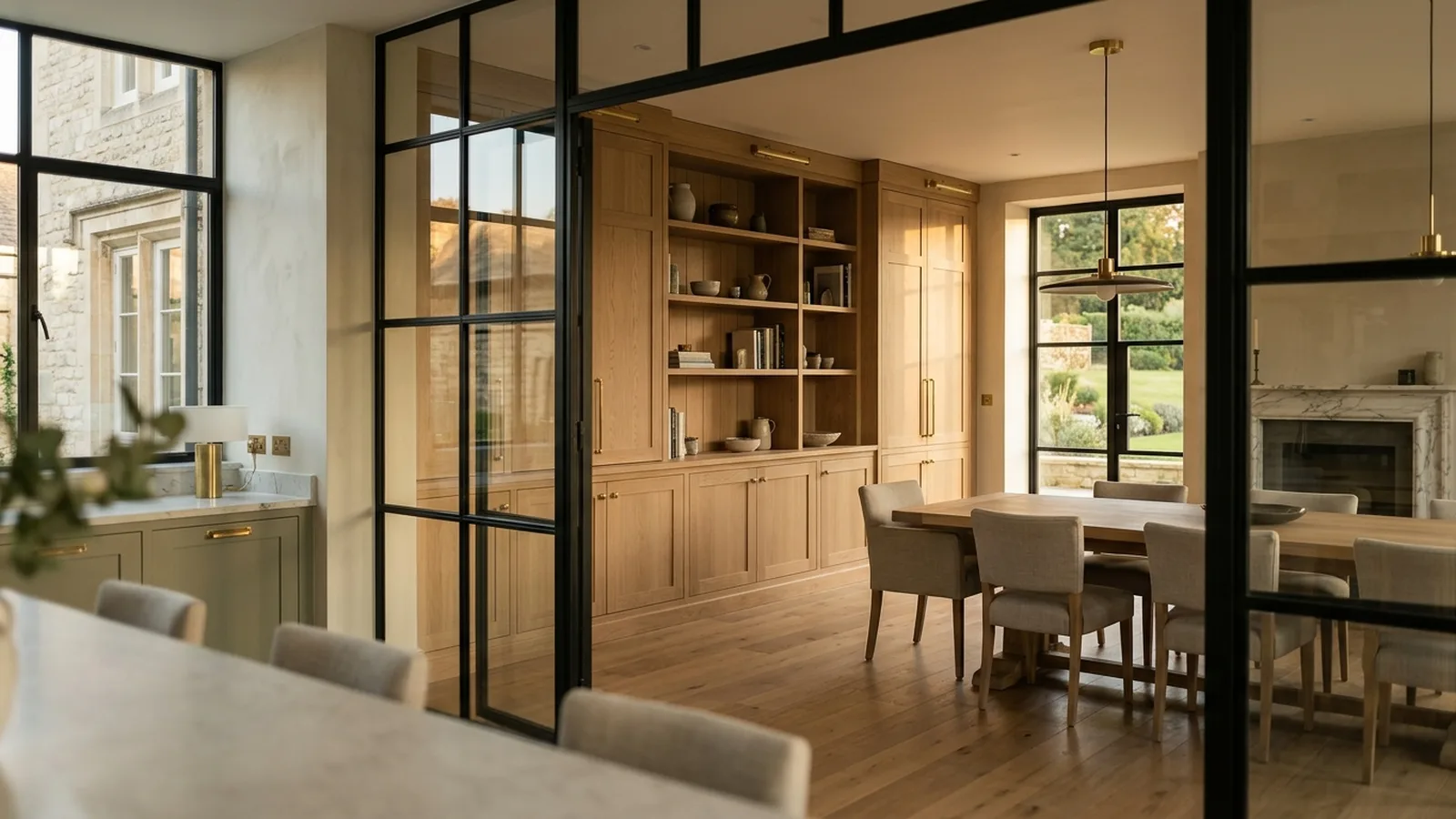
The most successful renovations tend to respect what makes the house special while making it genuinely comfortable for modern life. That can mean improving flow, bringing in more light, upgrading energy performance, adding discreet storage and making kitchens and bathrooms work harder for family routines. In older Wells homes, the challenge is rarely about making everything look new; it is about helping the property feel settled, practical and coherent. A recent NOOR renovation in the area gives a sense of this considered approach in practice: view the project.
Choosing the right team is a large part of making that balance work. Period homes benefit from designers and builders who are used to uncertainty, who can communicate clearly when conditions change, and who understand when to restore, when to adapt and when to leave well alone. If you are comparing options, it is worth looking not only at style and cost, but also at process. Understanding how we work can help clarify what support you will need from first ideas through to completion, especially on a more intricate home.
For many homeowners in Wells, the renovation journey is as much about stewardship as improvement. Older properties ask for care, but they often give back through character, longevity and a quality of space that is hard to recreate from scratch. If you are considering work to a period or listed home and would like experienced guidance on scope, budget and next steps, you can request a consultation.
[ Talk to NOOR ]
Planning a project of your own? Request a free initial consultation and we will give you honest, informed advice on your home.
Request a Consultation